
Restoring Victorian Wooden Stairs in Clapham for a Safer, Cleaner Finish
In many period homes across Clapham, the staircase is one of the first original timber features people notice. Worn treads, chipped nosings, old gloss paint, dark traffic lanes and loose balusters can make even a beautiful Victorian stair look tired. At Clapham Floor Sanding, we regularly restore staircases in Clapham terraces and conversions where the goal is not simply to make the timber look cleaner, but to recover character, improve safety and apply a finish that suits modern family life.
Unlike sanding a flat room, stair restoration is slower, more delicate and more technically demanding. Every tread, riser, spindle junction, edge detail and landing transition needs careful attention. Original Victorian softwood often contains decades of polish, paint, filler, carpet-gripper damage and uneven wear. If the staircase has also suffered movement, squeaks or previous patch repairs, the work needs to be approached as a restoration project rather than a basic sanding job.
For homeowners in SW4, this matters because many Clapham properties still retain original stair components, even when the floors elsewhere have been replaced or covered. A properly restored staircase can visually reconnect a hallway, landing and upper rooms, especially when paired with sympathetic board repairs, gap filling and a finish that works with the age of the property.
Quick answer: Yes, most wooden staircases in Clapham’s Victorian homes can be sanded and restored, but the best result depends on the timber species, the thickness of previous coatings, the condition of tread edges, and whether repairs are needed before finishing. In many cases, careful sanding followed by hardwax oil or a durable lacquer will deliver a cleaner, safer and longer-lasting staircase without losing period character.
Why Victorian staircases need a different restoration approach
Victorian stairs are rarely uniform. In one Clapham home, you may find old pine treads hidden under carpet adhesive; in another, painted risers, stained handrails and patched bullnose steps. Some staircases have been repeatedly decorated over with modern gloss, while others have exposed timber that has dried, cupped or become rounded at the front edge through decades of foot traffic.
That is why a one-size-fits-all approach rarely works. A proper staircase assessment usually checks:
- how many layers of paint, varnish or stain are present,
- whether the timber is softwood or hardwood,
- the condition of nosings and tread edges,
- whether open joints or movement are causing squeaks,
- if any previous filler has failed,
- how the staircase ties into the landing boards and hallway floor.
On older Clapham staircases, softwood is common, especially in Victorian terraces. That means the timber often dents more easily than oak and requires a controlled sanding sequence rather than aggressive cutting. If the wood has historic paint embedded in corners and moulded details, hand preparation and detail sanding become just as important as the main machine work.
Common problems we see on Clapham wooden stairs
Most staircases we inspect in Clapham suffer from a combination of cosmetic wear and structural age-related issues rather than one isolated defect. The most common include:
1. Worn tread centres
The middle of each tread usually shows the heaviest traffic. On old staircases, this creates hollow-looking wear patterns, dark staining and a visibly thinner finish in the walking line.
2. Rounded or damaged nosings
The front edge of the tread often receives the worst impact. Chipped nosings, splintering and old nail repairs need careful attention before finishing, otherwise the staircase still looks tired even after sanding.
3. Paint build-up on risers and strings
Many Victorian staircases have been repainted for decades. Thick coatings can crack, obscure moulding profiles and make the whole stair feel heavy and dated.
4. Carpet damage
Old carpet rods, gripper marks, staple holes and adhesive residue are extremely common. Once the carpet comes off, it often reveals a staircase that needs far more preparation than expected.
5. Movement and squeaks
Loose wedges, slight movement between tread and riser, and age-related shrinkage all contribute to noise and instability. These issues should be dealt with before the finishing stage.
6. Mismatched historic repairs
It is common to find sections filled with unsuitable modern filler, rough patches of different timber, or paint hiding localised repair work. Good restoration aims to reduce those visual interruptions rather than exaggerate them.
Can every staircase be sanded?
Not every staircase should be treated in exactly the same way, but most solid timber stairs can be improved significantly with the right restoration plan. The key is to inspect the timber honestly before work starts.
For example, an original Victorian pine staircase can usually be sanded and refinished very successfully, provided the treads still have enough sound material and the damage is not too deep. Hardwood stairs are also excellent candidates for sanding, though species and previous coatings affect the final appearance. Where a staircase includes veneer-faced elements, thin overlays or heavily damaged replacement parts, more selective preparation may be needed.
If there are severe structural defects, rot, major splitting or unsafe movement, those repairs should come first. Sanding is a finishing stage, not a substitute for sound joinery.
The professional process for sanding wooden stairs properly
Stair restoration is meticulous work. A proper process usually includes the following stages:
Initial inspection and moisture/stability checks
Before sanding begins, the staircase should be assessed for loose sections, damaged boards, movement, moisture-related problems and finish build-up. In period properties, this early diagnosis is critical because hidden issues often sit beneath carpet or paint layers.
Protection and preparation
Adjacent walls, skirting, hallway flooring and landing transitions should be protected. Carpet remnants, staples, old grippers and surface contaminants are removed so the sanding process starts on a clean base.
Repairs before heavy finishing work
Any broken edges, failed filler, local timber patches or open joints should be addressed before the final sanding sequence. On Victorian stairs, it is often better to repair first and then blend the surface rather than sand heavily in an attempt to remove every defect.
Controlled grit progression
Professional stair sanding is usually carried out through a staged abrasive sequence rather than a single pass. Depending on the coating and condition, this may begin at a coarser grade to remove paint or failed finish, then move through medium and finer abrasives to refine the timber and prepare it for sealing. On period softwood, over-sanding can flatten edges and erase character, so restraint matters.
Detail sanding on corners and profiles
Stairs contain far more awkward zones than a normal floor: tight corners, spindle junctions, cut strings, nosings and side returns. These areas must be blended carefully so the finish looks consistent from top to bottom.
Fine filling and surface refinement
Once the timber is clean and the main repairs are complete, small cracks, nail holes and minor imperfections can be addressed where appropriate. This is also the point where the final surface is refined for finish adhesion.
Sealing and finishing
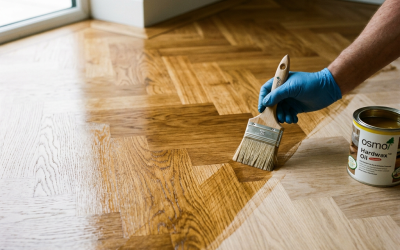
The final appearance depends heavily on the chosen finish. For busy homes, many contractors favour durable systems such as Bona Traffic HD for strong wear resistance, while homeowners wanting a more natural, repairable appearance often consider hardwax oil systems such as Osmo Polyx-Oil. Finish selection affects not only the look, but also future maintenance, slip feel and spot-repair practicality. Industry guidance from NAFWA is also useful when considering appropriate wood floor care and restoration standards.
Best finishes for wooden staircases in busy Clapham homes
The best finish is not always the glossiest or the one that looks best for the first week. On staircases, durability and maintenance matter just as much as appearance.
Lacquer
A quality lacquer is popular where the client wants a clean, durable, easy-to-maintain surface. It can work particularly well on family staircases with heavy daily foot traffic. The right system provides strong resistance to scuffing and regular wear, though local repair can sometimes be more visible than with an oiled system.
Hardwax oil
Hardwax oil tends to suit period interiors where a warmer, more natural character is desired. It enhances grain beautifully on older pine and can be easier to maintain locally over time. For Clapham homeowners restoring original Victorian features, this is often an attractive option because it avoids an overly plastic look.
Stain plus protective finish
Some homeowners want the staircase toned darker to match parquet, hallway boards or landing floors. This can work well, but colour sampling is essential. Historic pine absorbs stain unevenly, and tread edges often wear differently from flat surfaces, so the final colour needs careful testing.
Should risers stay painted or be sanded back to timber?
This depends on the interior style, the condition of the timber and the level of historical paint build-up. In many Victorian properties, a mixed treatment works best: exposed timber treads and handrail, with painted risers and strings for contrast. This can feel true to the age of the house while still brightening the staircase.
Where the entire staircase timber is attractive and consistent, sanding everything back can create a striking result. However, if the risers are lower-grade timber or have deep historic paint penetration, keeping selected areas painted can be the neater and more cost-effective choice.
Stair sanding vs replacing the staircase
For many Clapham homes, restoration is the more sensible route. Replacing a staircase is substantially more disruptive, more expensive and often unnecessary when the existing joinery is fundamentally sound. Original Victorian stairs usually bring proportions, detailing and patina that are difficult to replicate convincingly with new materials.
Restoration also allows targeted improvements without losing the staircase’s architectural value. Repairing local damage, sanding worn treads and applying a modern protective finish can dramatically improve the appearance while preserving the period feel of the property.
Where homeowners are already considering broader timber work, it also makes sense to explore related services such as wood floor sanding in Clapham so the hallway, landing and stairs work together visually. The same joined-up approach often applies where older hall boards need advice similar to that covered in making Victorian boards look new again or where general preparation, finishing and maintenance issues overlap with the ultimate guide to wood floor sanding.
How long does staircase sanding take?
It depends on the number of steps, the amount of paint or old finish present, the level of repair work required and the chosen finish system. A straightforward staircase in decent condition may take much less time than one with heavy paint stripping, damaged nosings and detailed spindle work nearby.
As a rule, stairs are more labour-intensive per square metre than open floors because every individual tread and edge must be worked carefully. On the live Clapham pricing page, stair stripping, sanding and sealing are priced separately per step, which reflects the extra time and detail involved.
What Clapham homeowners should know before booking
If you are planning to restore a staircase in a Victorian or Edwardian property, it helps to think about the wider scheme rather than the stairs in isolation. Consider:
- whether the landing boards also need sanding,
- if hallway flooring should be colour matched,
- whether you prefer a natural or darker tone,
- how much historic character you want to retain,
- which finish is most practical for children, pets and daily traffic.
It is also worth discussing traffic management during the work, especially in family homes where the staircase is the main route through the property. Proper planning keeps disruption manageable and helps the finish cure correctly.
Why staircase restoration adds value beyond appearance
A beautifully restored staircase does more than improve looks. It can make an entrance hall feel brighter, lift the perceived quality of the whole interior and reinforce the period identity of the home. In property terms, original details that have been carefully revived often create a stronger impression than generic modern replacements.
For Clapham period homes in particular, the staircase is often a focal point connecting hallway, landing and upper floors. When restored properly, it can transform how the entire house feels from the moment someone steps through the front door.
Final thoughts
Sanding wooden stairs in Clapham is not just about making old treads look cleaner. It is about understanding period timber, repairing age-related wear properly and choosing a finish that works for both the building and the people living in it. Victorian staircases deserve careful, skilled restoration because once edges are over-sanded or details are lost, they cannot easily be put back.
If your staircase is hidden under carpet, scarred by old paint, or simply no longer doing justice to the rest of your home, the right restoration approach can reveal far more than you expect. To discuss your options, visit the home page, review likely project considerations on the prices page, or arrange an assessment through the site’s quote and callback options.
FAQs
Can painted Victorian stairs be sanded back to bare wood?
Yes, in many cases they can, but the result depends on how many layers of paint are present and whether the timber underneath is good enough to leave exposed. Some staircases benefit from exposed treads with painted risers and strings.
Is hardwax oil better than lacquer for stairs?
Neither is automatically better. Hardwax oil gives a more natural appearance and can be easier to repair locally, while lacquer is often chosen for strong day-to-day wear resistance in busy homes.
Will sanding remove squeaky stairs?
No. Squeaks are usually caused by movement between components and should be addressed as part of the repair stage before finishing, not by sanding alone.
Can damaged tread edges be repaired?
Often, yes. Minor chips, splits and worn nosings can frequently be repaired or stabilised before the staircase is sanded and sealed.
Are staircases more expensive to sand than flat floors?
Usually, yes, because they involve much more detailed manual work. Live pricing on the Clapham site lists stairs separately on a per-step basis, which reflects the extra labour involved.