Herringbone & Block Parquet Floor Sanding in Clapham: A Complete Restoration Guide
If your parquet floor has lost its crisp definition, picked up blackened edges, or started to feel uneven underfoot, professional restoration is usually the best way to bring it back properly. At Clapham Floor Sanding, we restore original and modern parquet floors across Clapham with careful sanding, block repairs, gap work and hard-wearing finishes designed for busy London homes. From elegant herringbone in Victorian terraces to traditional block parquet in mansion flats, the goal is the same: preserve the pattern, stabilise the floor and reveal the beauty of the timber beneath the old finish.
Unlike straight floorboards, parquet needs a more controlled approach. Herringbone, basket weave and block layouts can show scratches, over-sanding, lipping and poor repairs far more easily than plank floors. That is why a proper parquet restoration plan matters. It starts with inspection, moisture awareness and subfloor stability, then moves through the right abrasive sequence, edge control, filler choice and finish selection for the specific property.
In Clapham, parquet restoration is especially common in period conversions, family homes and flats where decorative timber floors were originally fitted to create a refined, high-end interior. Many of these floors are structurally sound but cosmetically tired. They simply need expert sanding, localised repairs and a premium finish to become a feature again rather than something hidden under rugs or furniture.
Why Parquet Floors in Clapham Need a Specialist Sanding Approach
Parquet is decorative by design. Every block contributes to a repeated pattern, so any poor repair, missing section or uneven sanding pass is more obvious than on standard boards. With herringbone in particular, the angles of the pattern reflect light differently, which means even minor waves or sanding marks can spoil the final appearance.
Many Clapham properties also come with the typical complications of London housing stock. In Victorian and Edwardian homes, we often see old bitumen adhesive, historic water staining near bay windows, minor movement around chimney breasts, and block loosening caused by years of seasonal expansion and contraction. In some flats, old parquet has also been covered and uncovered several times, leading to adhesive contamination, surface paint flecks or isolated patch repairs in the wrong timber species.
A specialist restoration service addresses these issues in the right order instead of simply sanding the top and hoping for the best. The floor must be assessed for loose blocks, hollows, moisture-related movement, subfloor soundness and previous finish build-up before the main machine work begins.
Common Problems We See in Herringbone and Block Parquet
Parquet floors usually fail in predictable ways. The most common issues include:
- Loose or drummy blocks caused by adhesive failure or subfloor movement
- Lipping where one block sits slightly higher than the next
- Black edge staining from historic moisture ingress or old cleaning residues
- Open joints and minor gaps between blocks
- Patchy old sealers where previous coatings have worn away unevenly
- Deep scratches and traffic lanes in entrances, hallways and reception rooms
- Mismatched repairs where replacement pieces do not suit the original parquet
Before any restoration starts, these defects should be mapped properly. Loose parquet should be re-bonded. Damaged pieces should be replaced with matching reclaimed or closely matched timber. Surface contamination should be removed methodically so the sanding stages can cut evenly across the full pattern.
Our Parquet Floor Sanding Process
1. Detailed Inspection and Moisture Assessment
Every parquet floor starts with an inspection of condition, wear level and stability. We check whether the blocks are firmly bonded, whether there is any evidence of subfloor movement, and whether the floor has enough usable wear layer left for sanding. Moisture-content mapping is especially important where there are signs of past leaks, dark staining or movement near external walls and ground floors.
2. Repairs Before Sanding
Parquet should be repaired before the main sanding passes begin. Loose blocks are lifted and re-fixed where necessary. Missing sections are pieced in with matching dimensions and grain direction so the repair disappears into the pattern rather than standing out. Where there is localised damage, isolated block replacement is usually far better than trying to disguise it with stain.
3. Controlled Sanding with the Correct Grit Sequence
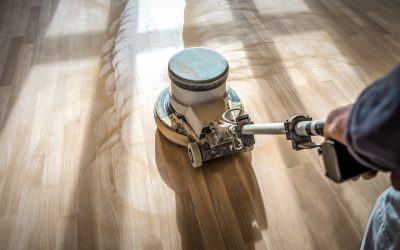
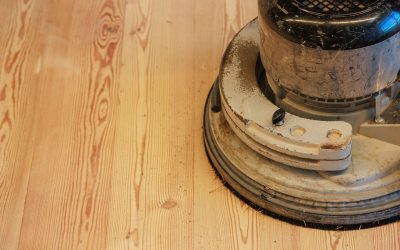
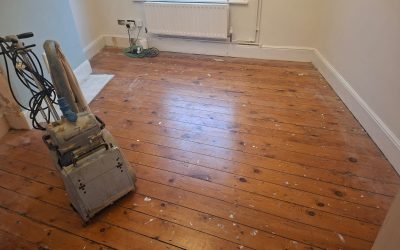
Once the floor is stable, the sanding sequence begins. On many worn parquet floors, a careful 36–40 grit opening pass may be needed to remove old finishes and level light lipping, followed by 60, 80 and 100 or 120 grit refinement depending on species, condition and finish choice. The aim is not aggressive material removal. The aim is to flatten, clean and refine the parquet while preserving the geometry of the pattern and avoiding chatter, dish-out or swirl marks.
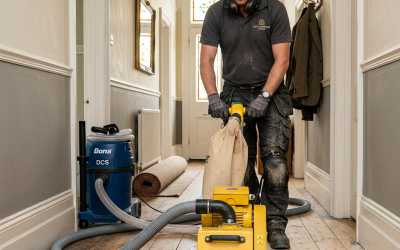
Professional sanding systems from manufacturers such as Bona are designed to create a more even surface and better dust capture during the renovation process. That matters on parquet because dust contamination and surface inconsistency show up quickly once the final coat goes down.
4. Edge Work and Corners
Parquet sanding is never just about the main field. The perimeter must be blended properly into the centre area using edging equipment and corner tools. Poor edge work is one of the main reasons parquet restorations look amateur. Around skirtings, hearths and thresholds, the finish quality must stay consistent so the pattern reads cleanly across the whole room.
5. Fine Filling and Surface Preparation
For hairline gaps and small surface imperfections, a fine resin filler mixed with clean sanding dust can help tighten the appearance. Larger movement joints or unstable sections should not be blindly filled; they need structural judgement first. On decorative floors, filler colour and timing matter. A poor filler choice can dull the visual rhythm of herringbone and make the floor look muddy after sealing.
6. Sealing and Finishing
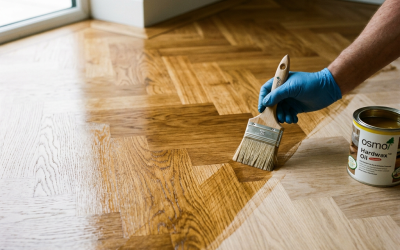
Once the parquet is clean, smooth and dust-free, the finish system is chosen based on how the room is used. For a natural, low-sheen look that keeps the grain character visible, hardwax oil systems remain popular. Products such as Osmo Polyx-Oil are widely used on timber floors where clients want a rich, organic appearance with good repairability. For busy family homes, hallways and living spaces that need strong wear resistance, high-performance lacquers are often the better fit.
Herringbone vs Block Parquet: What Changes During Restoration?
Herringbone and block parquet are both parquet, but they do not always behave in exactly the same way during restoration. Herringbone tends to highlight alignment, edging accuracy and sheen uniformity more strongly because the angled pattern catches light from multiple directions. Straight block parquet can be slightly more forgiving visually, but it often shows lipping and patch repairs more clearly.
In both cases, the sanding technician must work to preserve the decorative intent of the floor. This means avoiding overly aggressive cuts, managing transitions carefully and selecting a finish that enhances definition rather than flattening the pattern visually. For many Clapham interiors, a matt or ultra-matt finish works particularly well because it looks elegant without giving the floor an overly plastic appearance.
Best Finish Options for Restored Parquet Floors
The right finish depends on the room, the timber and the look you want.
Lacquer
Lacquer is a strong option for busy households, especially in entrance halls, kitchens opening into living spaces and large reception rooms. It creates a sealed, durable wear layer and is often preferred where easy routine cleaning matters most.
Hardwax Oil
Hardwax oil is ideal for homeowners who want a more natural, low-build look. It enriches the grain and gives parquet a softer, more architectural finish. It is also a practical choice where local maintenance and spot repairability are important.
Colour Toning or Staining
Some parquet floors benefit from subtle tonal adjustments, but stain should be used carefully. Decorative floors already have plenty of visual interest, so heavy staining can sometimes obscure the crispness of the block pattern. Sample areas are always sensible before committing to a full-room colour shift.
Industry guidance from the NWFA technical guidelines is useful for understanding why correct preparation, sanding method and finishing sequence matter so much on wood floors generally. Good parquet results come from process discipline, not shortcuts.
Why DIY Parquet Sanding So Often Goes Wrong
Decorative floors are one of the least forgiving surfaces to sand with hire equipment. Common DIY problems include drum stops, edger halos, over-sanded corners, visible swirl patterns and poor blending between the centre field and the edges. On parquet, those defects are very hard to hide because the eye naturally follows the pattern lines.
There is also the issue of judgement. Not every loose block should be filled around. Not every dark mark will sand out safely. Not every old parquet floor has enough material left to tolerate heavy levelling. That is why professional inspection matters before any machine touches the floor.
How Long Does Parquet Floor Sanding Take?
Timing depends on the size of the room, the amount of repair work and the finish system selected. A straightforward parquet room in reasonable condition may take one to two days for sanding and initial sealing. A larger or more intricate floor with loose blocks, stain work or multiple coats can take longer. Drying and curing times also vary by product, room temperature and ventilation.
In Clapham homes, we often advise clients to plan around access routes, pets, furniture movement and finish cure times rather than focusing only on sanding day. A beautiful parquet floor is worth doing properly once.
When Is Restoration Better Than Replacement?
In most cases, restoration is the smarter investment. Original parquet adds character, suits period architecture and usually costs less to restore than to replace with equivalent quality material. Replacement only becomes necessary when the blocks are beyond recovery, the subfloor has failed extensively, or the parquet has already been sanded too many times in the past.
If the floor still has structural integrity, restoration preserves authenticity and usually delivers the better visual result. That is particularly true in Clapham’s period homes, where original timber detail often adds more value than modern imitation flooring.
Related Floor Sanding Advice for Clapham Property Owners
If you are comparing restoration options or planning a larger timber floor project, these guides may also help:
- Wood Floor Sanding in Clapham: Get a Flawless, Dust-Lite Finish
- Clapham Floor Sanding Tips: Make Your Victorian Boards Look New Again
- The Ultimate Guide to Wood Floor Sanding: Transforming Your Floors Like a Pro
FAQs
1. Can herringbone parquet floors be sanded?
Yes, herringbone parquet floors can usually be sanded if the blocks are still structurally sound and have enough wear layer remaining. Professional sanding helps restore the pattern without damaging the edges or overall layout.
2. How many times can a parquet floor be sanded?
That depends on the thickness of the parquet blocks and their current condition. Solid parquet can often be sanded multiple times, but older floors need careful inspection before any work begins.
3. Is parquet floor sanding messy?
Modern parquet floor sanding is far cleaner than older methods. Professional dust-controlled systems capture most of the sanding dust, helping keep disruption to a minimum.
4. How long does parquet floor restoration take?
Most parquet floor restoration projects take between one and three days, depending on the room size, the amount of repair work needed, and the finish chosen.
5. Can damaged parquet blocks be replaced before sanding?
Yes. Loose, cracked or missing parquet blocks can usually be repaired or replaced before sanding starts. Matching the size, species and pattern direction is important for a seamless finish.
6. What finish is best for parquet floors?
The best finish depends on the room and the look you want. Lacquer is ideal for high-traffic durability, while hardwax oil gives a more natural appearance and is easier to maintain locally.
7. Is it better to restore parquet flooring or replace it?
In many cases, restoring parquet is more cost-effective and preserves the original character of the property. Replacement is usually only necessary when the floor is beyond structural repair.
8. Do parquet floors add value to a Clapham home?
Well-restored parquet floors can improve the appearance and perceived value of a Clapham property, especially in period homes where original decorative flooring is a desirable feature.
Why Clapham Homeowners Choose Professional Parquet Restoration
Parquet floors are not just another surface finish. They are part of the architecture of the room. When restored properly, herringbone and block parquet can completely change how a space feels, making it lighter, cleaner and more valuable-looking without losing its original character.
Professional restoration means more than sanding alone. It means accurate diagnosis, stable repairs, correct abrasive progression, clean edge detailing, premium finishing products and a method that respects the pattern rather than flattening it. Whether your floor needs localised block replacement, full surface sanding or a complete decorative revival, the best results come from a restoration-led approach.
If your parquet floor in Clapham is scratched, dull, uneven or partly hidden under old coatings, now is the right time to restore it properly. Visit Clapham Floor Sanding to arrange an assessment and get expert advice on herringbone sanding, block parquet repairs, finishing options and long-term floor care tailored to your property.
`